
2026

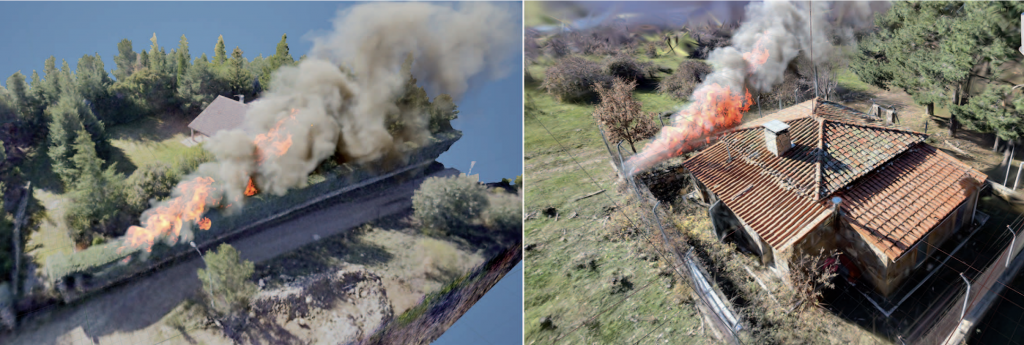
Next-Gen Fire Science & AI: The HiDALGO2 Wildfires team at ICFFR

As climate change accelerates the frequency and intensity of extreme wildland fires across Southern Europe, emergency responders face a critical challenge: predicting fire trajectories accurately and rapidly enough to protect lives and ecosystems. Bridging high-performance computing (HPC), artificial intelligence, atmospheric coupling, and real-time visualisation is at the heart of modern wildfire resilience. As part of the […]

Next-Gen Fire Science & AI: The HiDALGO2 Wildfires team at ICFFR Read More »
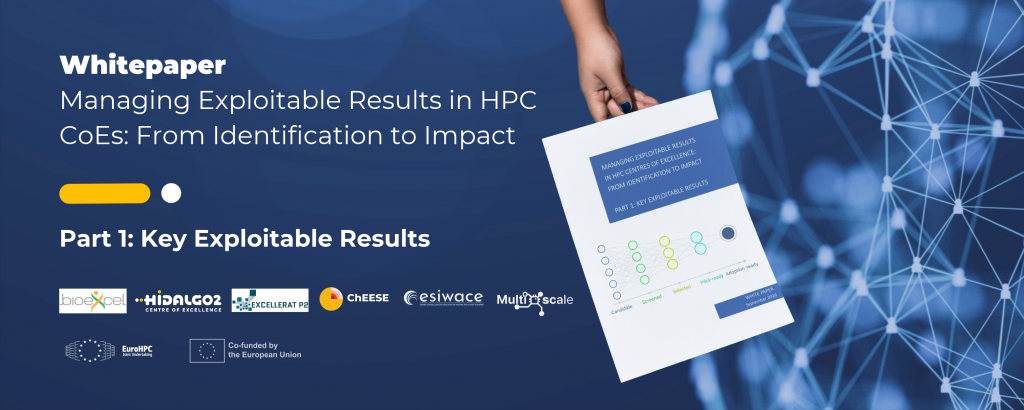
Six European HPC Centres of Excellence publish a practical framework to turn research results into real-world impact

Part 1 of a four-part white paper series explains how to identify and select Key Exploitable Results (KERs) in European research projects. Europe’s High Performance Computing (HPC) Centres of Excellence (CoEs) produce world-class science and software, yet many valuable results remain underused once a project ends. To help close this gap, a taskforce of professionals

Six European HPC Centres of Excellence publish a practical framework to turn research results into real-world impact Read More »

From Virtual Trees to Real Fire: Physical Simulation of Forest Fires on European Supercomputers

David Caballero, david@meteogrid.comForestry Engineer (UPM). Consulting Collaborator at MeteoGrid S.L., Spain. Editorial Contributor to RIyRN. The Problem: Simulating Fire with Physical Rigour A wildland fire is not just a visible flame. It is an integrated system of heat transfer, solid fuel combustion, atmospheric turbulence, and gas emissions interacting in fractions of a second and across

From Virtual Trees to Real Fire: Physical Simulation of Forest Fires on European Supercomputers Read More »

Join Us for the Online Workshop: “GPU Porting for HPC: Opportunities, Tools, and Libraries”

We are excited to announce an upcoming two-day online webinar, “GPU Porting for HPC: Opportunities, Tools and Libraries,” organised by HLRS in cooperation with HiDALGO2, EXCELLERAT P2, and Plasma-PEPSC under the umbrella of the High-Performance GPU Alliance. As High-Performance Computing (HPC) environments increasingly lean on GPU acceleration to tackle complex scientific and engineering challenges, understanding

Join Us for the Online Workshop: “GPU Porting for HPC: Opportunities, Tools, and Libraries” Read More »

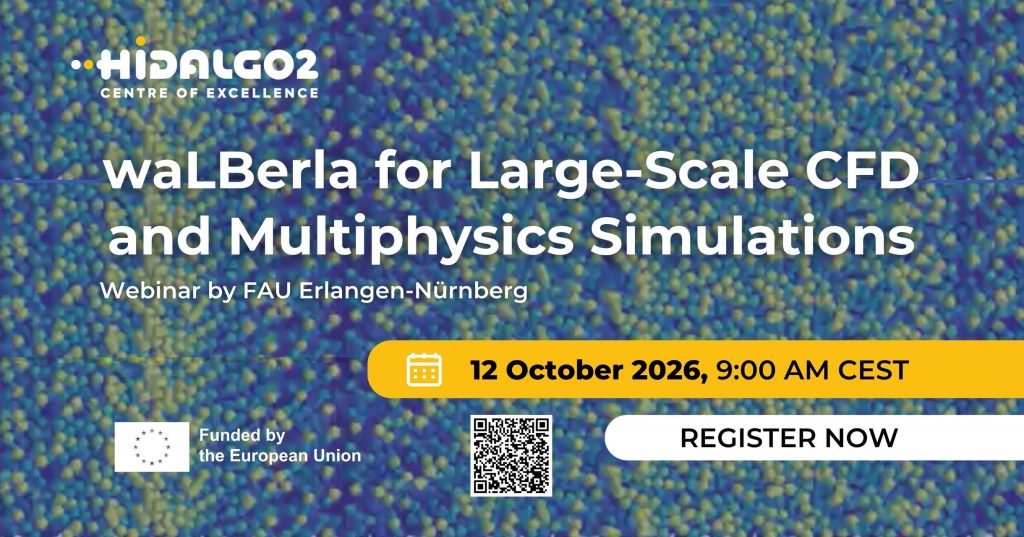
Join HiDALGO2 training for Large-Scale CFD & Multiphysics Simulations

About the Webinar High-fidelity numerical simulations are becoming increasingly important across engineering and scientific disciplines. From complex fluid flows and particle-laden systems to heat transfer, environmental flows, and large-scale industrial applications, computational simulations provide insights into physical processes that may be difficult or impossible to obtain experimentally. However, performing such simulations at high fidelity and

Join HiDALGO2 training for Large-Scale CFD & Multiphysics Simulations Read More »

16 Must-Read Publications on Extreme-Scale Engineering for Global Challenges

The science behind the HiDALGO2 innovations As global environmental, urban, and computing challenges expand, traditional computational frameworks frequently hit structural limits. Simulating entire cityscapes, tracing microscale atmospheric pollution, or predicting the flash progression of a wildfire requires massive processing capacity. However, raw power is no longer enough; next-generation engineering demands scalability, transparency, and energy awareness.

16 Must-Read Publications on Extreme-Scale Engineering for Global Challenges Read More »

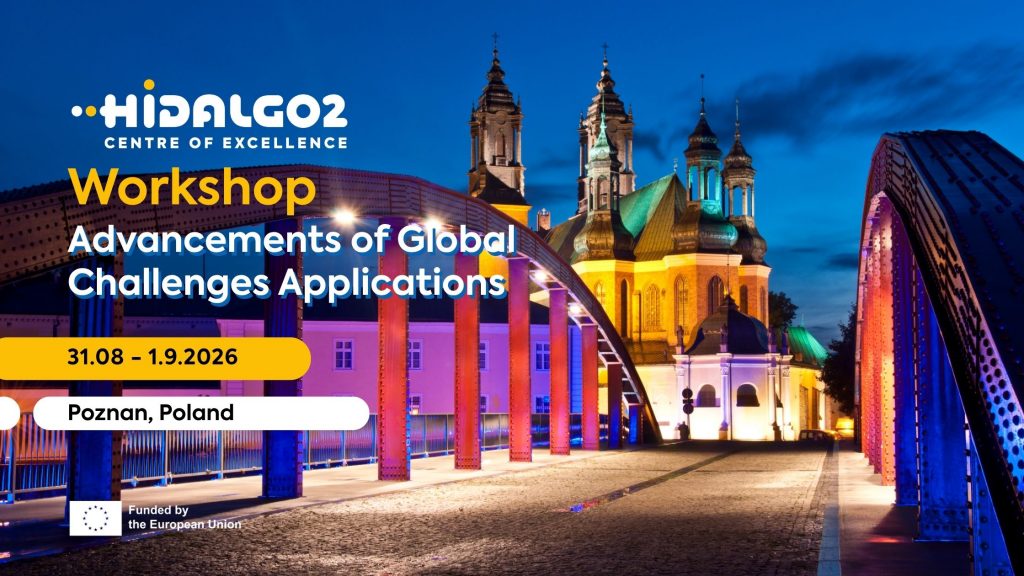
AGCA Workshop by HiDALGO2 Team at PPAM 2026

The HiDALGO2 Centre of Excellence is showcasing its latest research at the 16th International Conference on Parallel Processing and Applied Mathematics (PPAM 2026) in Poznań, Poland! A central highlight of our participation is the Advancements of Global Challenges Applications (AGCA) workshop, which brings together cutting-edge work across wildfire dynamics, urban microclimates, data analytics placement, and

AGCA Workshop by HiDALGO2 Team at PPAM 2026 Read More »

HPC revolutionises Urban Air Quality and Comfort: Predicting the Invisible

Urban environments face a silent challenge: the air we breathe and the invisible winds that shape our daily comfort. From the “canyon effect” of narrow streets trapping pollutants to the sudden danger of an accidental toxic gas release, understanding urban airflow is a necessity for public safety and sustainable city planning. As part of the

HPC revolutionises Urban Air Quality and Comfort: Predicting the Invisible Read More »

HiDALGO2’s Digital Twin Approach to Wildfire Resilience

As climate change intensifies, the nature of wildfires is undergoing a fundamental shift. They are no longer merely landscape events but have become complex atmospheric phenomena—often described as the “atmosphere in combustion.” Addressing these high-energy, destructive events requires more than traditional observation; it demands the immense processing power of High-Performance Computing (HPC) and the precision

HiDALGO2’s Digital Twin Approach to Wildfire Resilience Read More »

Innovative HPC Technologies and Benchmarking

HiDALGO2 team expands our understanding of how modern hardware and software innovations can optimise large-scale environmental simulations and AI-driven workflows. D3.6 deliverable: Innovative HPC Technologies and Benchmarking, currently under review by the EC, builds on our previous evaluations, as described in our previous reports D3.4 and D3.5  and focuses on state-of-the-art architectures from the world’s leading

Innovative HPC Technologies and Benchmarking Read More »

Ktirio Urban Building: High-Performance Simulation for Climate-Resilient Cities

How can we effectively renovate millions of buildings to meet climate goals? How can cities assess urban regeneration and climate-adaptation policies, improve indoor air quality and summer comfort, and prepare for heatwaves and other extreme events? At the HiDALGO2 clustering event, Christophe Prud’homme, Professor at the University of Strasbourg and leader of the Urban Buildings

Ktirio Urban Building: High-Performance Simulation for Climate-Resilient Cities Read More »

Empowering Smart Cities and Industry: Inside the HiDALGO2 Dashboard

Translating complex high-performance computing (HPC) simulations into actionable decisions for real-world environmental challenges requires intuitive tools. Urban planners, disaster management teams, and industrial stakeholders need direct access to advanced predictive models without spending weeks mastering cluster-level software environments. With the release of Deliverable 2.9 (D2.9): HiDALGO2 Dashboard and Services, the European Centre of Excellence HiDALGO2 introduces

Empowering Smart Cities and Industry: Inside the HiDALGO2 Dashboard Read More »

HiDALGO2 In-Person Plenary in Győr has Successfully Concluded

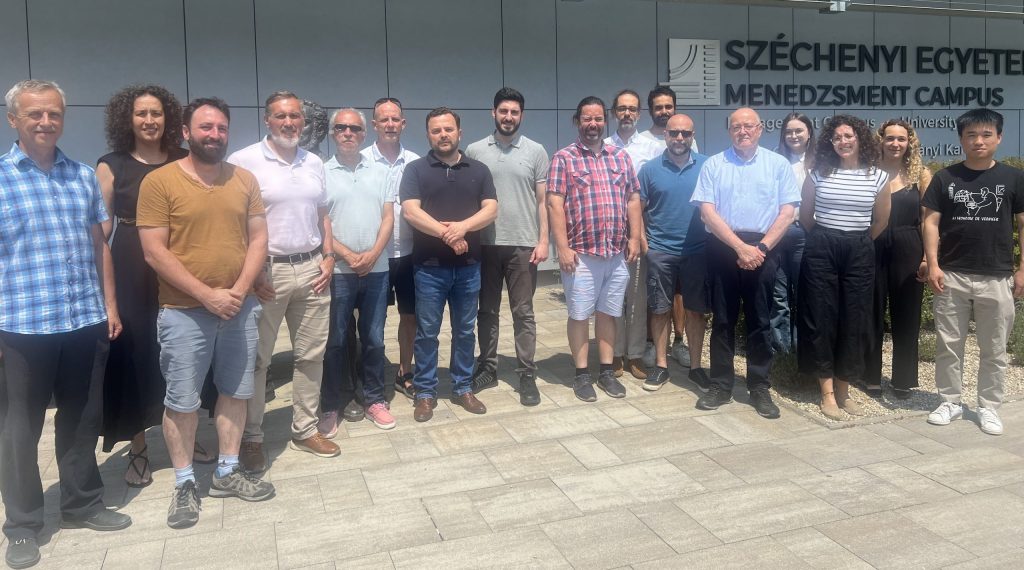
Last Wednesday marked the successful conclusion of our intensive 2-day In-Person Project Plenary Meeting! A big thank you to Zoltán Horvárth and the Széchenyi István University (SZE) for being such incredible hosts and bringing the consortium together in Győr, Hungary. Over the two days (June 30 – July 1), led by our coordinator Marcin Lawenda,

HiDALGO2 In-Person Plenary in Győr has Successfully Concluded Read More »

HPC for Material Transport in Water: From Microscopic Dynamics to Global Environmental Safety

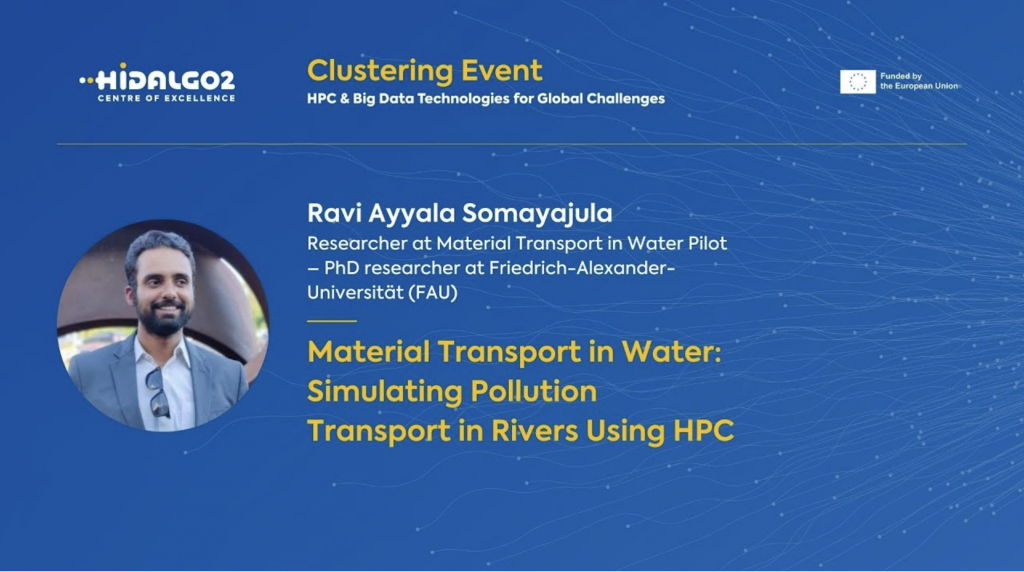
Sediment and material transport are fundamental drivers of river ecosystem health, coastal stability, and the structural integrity of hydraulic infrastructure. Yet, simulating these movements with high precision, especially when factoring in rapid environmental changes, has historically been a monumental computational challenge. As part of the HiDALGO2 project, the Material Transport in Water (MTW) pilot is

HPC for Material Transport in Water: From Microscopic Dynamics to Global Environmental Safety Read More »

HiDALGO2 Showcases “Layered Reproducibility” at Repro-HPC Workshop

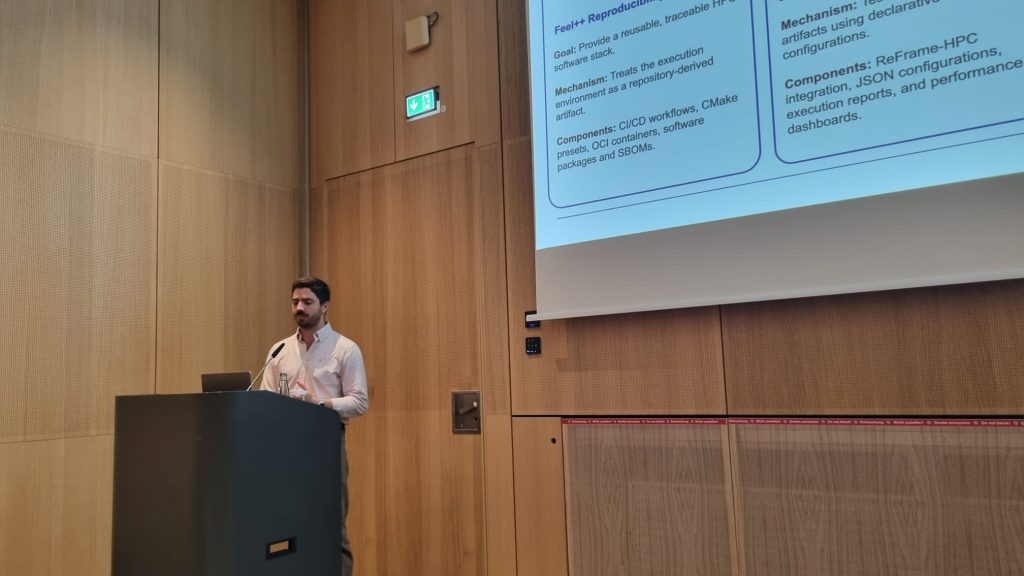
The Repro-HPC Workshop concluded on Friday 26th, 2026, and the HiDALGO2 project was there co-organising and presenting our last paper. The participants shared insights and presented cutting-edge research on one of the industry’s most pressing challenges: the reproducibility crisis. Representing the University of Strasbourg (Unistra), Javier Cladellas presented our newly published paper: “Layered Reproducibility for

HiDALGO2 Showcases “Layered Reproducibility” at Repro-HPC Workshop Read More »

Turning High Performance Computing into Real-World Innovation

HiDALGO2 Joins Forces with EXCELLERAT P2 and Plasma-PEPSC As high-performance computing transitions into the exascale era, tackling scientific and industrial challenges increasingly depends on collaboration across domains. To amplify the reach and impact of European simulation technologies, HiDALGO2 has joined forces with two fellow EuroHPC Centres of Excellence- EXCELLERAT P2 and Plasma-PEPSC—through the European Commission’s Horizon

Turning High Performance Computing into Real-World Innovation Read More »

Partner Insights: Can Supercomputers Be Truly Eco-Responsible?

As high-performance computing (HPC) scales up to the exascale era, the demand for massive computing power has never been higher. For projects like HiDALGO2, which relies on extreme-scale simulations to address critical global challenges—such as urban air quality, wildfire propagation, and renewable energy optimisation—computational performance is non-negotiable. However, as our systems grow more powerful, managing their

Partner Insights: Can Supercomputers Be Truly Eco-Responsible? Read More »

How HPC and AI are Powering the Renewable Energy Transition

As the European Union pushes toward its ambitious climate targets, the transition from fossil fuels to renewable energy sources (RES) has moved from a distant goal to a daily reality. In 2023, renewables accounted for 46.9% of the EU’s electricity production, already surpassing the 2030 target of 42.5%. However, this shift introduces a significant technical

How HPC and AI are Powering the Renewable Energy Transition Read More »

Supercomputers for the Planet – the HiDALGO2 project coordinated by PSNC

This article was authored in Polish by Małgorzata Szołucha, and published on April 28, 2026 on NCBR In a world where climate change, severe weather events, and energy transformation are becoming civilizational challenges, science capable of understanding and predicting them is increasingly important. Supercomputers, artificial intelligence, and advanced numerical simulations are coming to the rescue.

Supercomputers for the Planet – the HiDALGO2 project coordinated by PSNC Read More »

Project Synergies: Simulating and Mitigating Natural Hazards with EuroHPC

HiDALGO2 advances how High-Performance Computing (HPC) can solve major global and environmental challenges. As true progress in this domain relies on collaboration, the consortium has been working together with CASTIEL 2 and contributing on the HPC in Europe Portal, showcasing how European Centres of Excellence (CoEs) unite to manage natural and man-made hazards. Following the

Project Synergies: Simulating and Mitigating Natural Hazards with EuroHPC Read More »

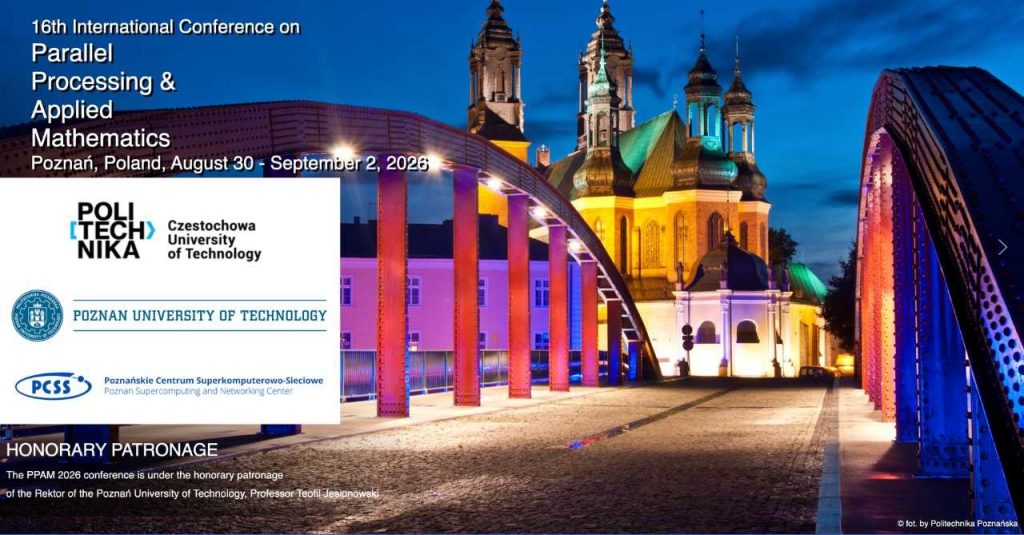
PPAM2026 venue night photo with multicolour lighting

Call for Papers: 2nd AGCA Workshop at PPAM 2026 – Tackling Global Challenges with HPC

Are you using HPC and AI to tackle the world’s most urgent challenges?

Join HiDALGO2 at the 16th International Conference on Parallel Processing and Applied Mathematics (#PPAM2026) in Poznań, Poland.

We are officially inviting submissions for our workshop: Advancements of Global Challenges Applications (AGCA).

Call for Papers: 2nd AGCA Workshop at PPAM 2026 – Tackling Global Challenges with HPC Read More »

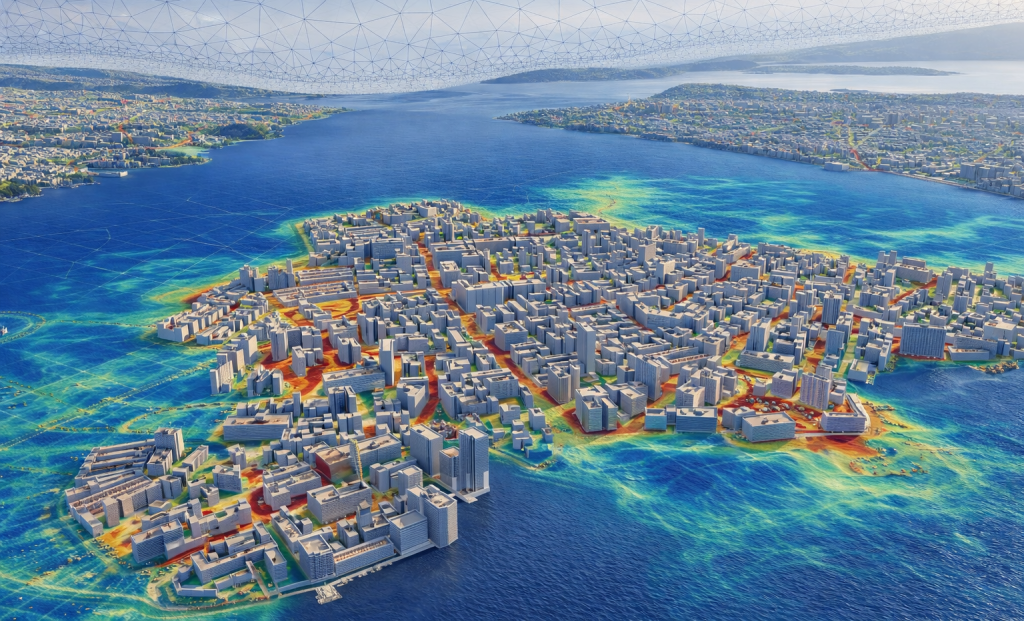
Success Story: High-resolution urban wind comfort computation for the city of Stockholm

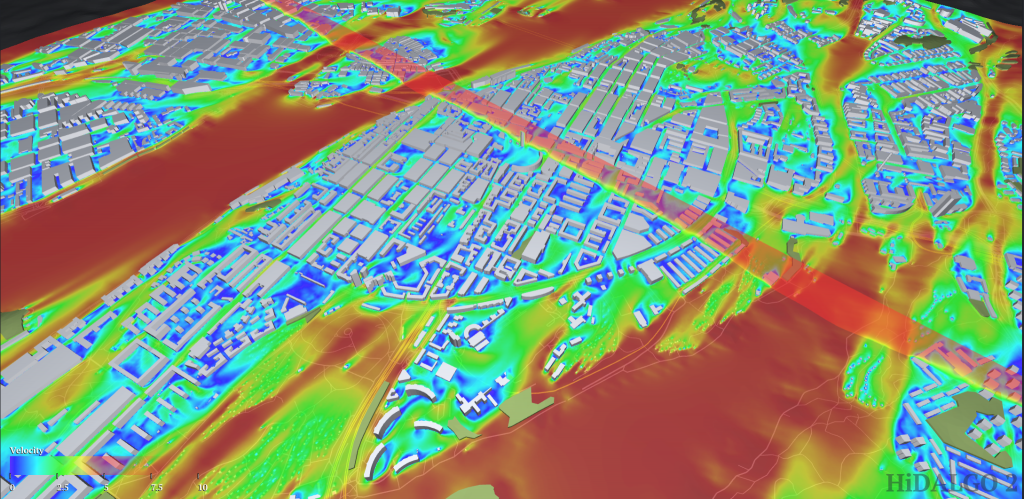
In a collaborative effort between HiDALGO2, SLB-analys, and ENCCS, researchers have developed a scalable HPC solution to simulate wind patterns across the entire city of Stockholm at unprecedented resolution. The Challenge Wind in urban environments significantly impacts inhabitant comfort and safety. Tall buildings can create “wind tunnels” where speeds far exceed averages, potentially putting pedestrians

Success Story: High-resolution urban wind comfort computation for the city of Stockholm Read More »

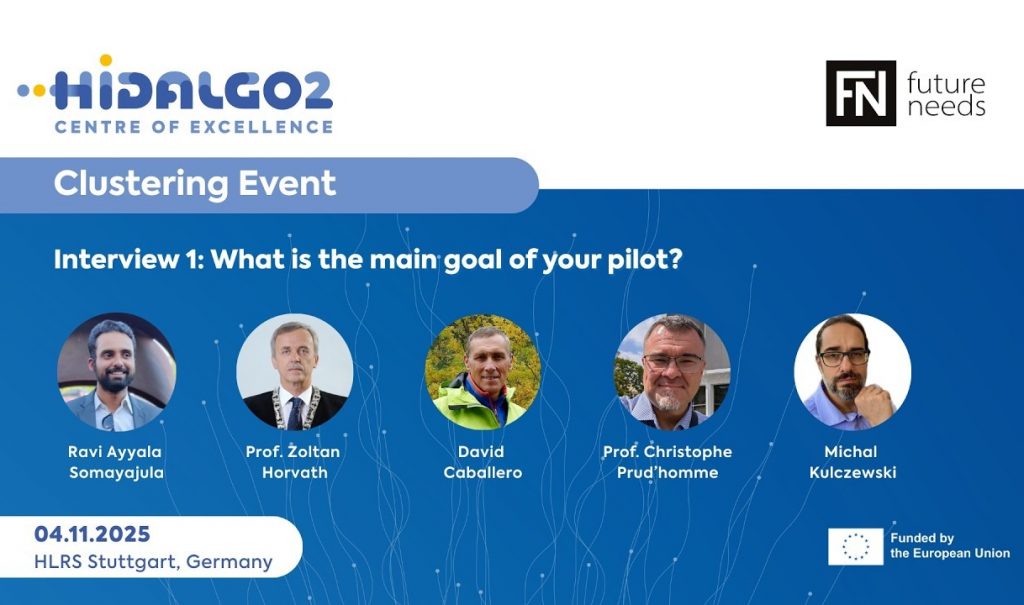
Experts explain the Core Mission of our 5 Pilots

High-Performance Computing (HPC) is often discussed in terms of raw power—nodes, cores, and floating-point operations. But at the recent HiDALGO2 Clustering Event at HLRS in Stuttgart, the conversation shifted from the how to the why. Through the five HiDAGLO2 pilots, our researchers are turning massive datasets into actionable tools for a safer, more sustainable world.

Experts explain the Core Mission of our 5 Pilots Read More »

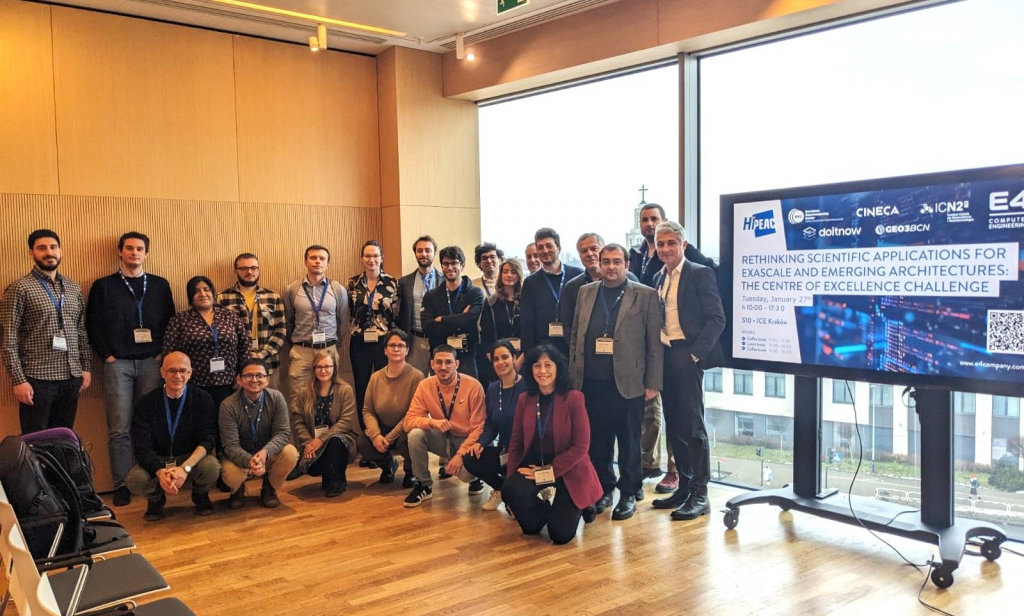
HiDALGO2 & EXCELLERAT at HiPEAC 2026: Showcasing the Value of CoEs

The HiPEAC 2026 Conference in Kraków, Poland (January 26–28), brought together Europe’s leading experts in computer architecture and high-performance computing. Beyond the technical sessions, a major highlight for the project was the exploration of how Centres of Excellence (CoEs) deliver tangible value to the European research landscape and industry. The CoE Workshop: Rethinking Scientific Applications

HiDALGO2 & EXCELLERAT at HiPEAC 2026: Showcasing the Value of CoEs Read More »

HiDALGO2 Researchers Publish New Paper on Evaluating AMD EPYC CPU Architectures on CFD Applications

The HiDALGO2 Centre of Excellence is pleased to announce a new publication by its researchers, focusing on assessing the impact of processor architecture on the performance of Computational Fluid Dynamics (CFD) applications. The paper, titled “Evaluating AMD EPYC CPU architectures on CFD applications,” appears in Future Generation Computer Systems, Volume 177. Key Insights from the

HiDALGO2 Researchers Publish New Paper on Evaluating AMD EPYC CPU Architectures on CFD Applications Read More »

Scroll to Top