
RELEASE DATE: NOVEMBER 2025 | 4th Press Release of the HiDALGO2 Project
Stockholm and HiDALGO2 Achieve 15-Minute Urban Wind Simulations
Funded by EuroHPC, this multi-GPU workflow allows municipal planners to evaluate city-scale microclimates and wind safety in real time

STOCKHOLM, Sweden — November 19, 2026 — In an important achievement for sustainable urban planning, the EuroHPC Centre of Excellence HiDALGO2, in collaboration with the EuroCC National Competence Center Sweden (ENCCS) and SLB-analys (Environment and Health Administration of the City of Stockholm), has successfully demonstrated a multi-GPU supercomputing workflow capable of simulating urban microclimates across a 100 km² metropolitan area in just 15 minutes.
As European cities expand, high-rise construction can inadvertently create “urban canyons”—localised wind tunnels that compromise pedestrian comfort and trap street-level air pollution. Evaluating these microclimatic impacts has traditionally required weeks of physical wind-tunnel testing or slow, specialised engineering software.

Led by researchers at Széchenyi István University (SZE) under the supervision of Prof. Zoltán Horváth, the HiDALGO2 Urban Air Project team adapted their high-performance software stack—the RedSim multi-GPU solver and CFDR remote web rendering engine—to process high-precision GIS elevation data from the City of Stockholm.
Prof. Zoltán Horváth (Széchenyi István University), leader of the HiDALGO2 Urban Air Project pilot
Key achievements of the Stockholm pilot include:
- High-Resolution Precision: Full city modelling at 1-to-2 metre horizontal resolution across complex terrain.
- Operational Scale Speed: Generating complete 3D city meshes and executing full multi-node Computational Fluid Dynamics (CFD) scenarios in approximately 15 minutes on 12 HPC nodes.
- Zero-Install Web Accessibility: Streamlined remote rendering via CFDR, allowing municipal planners to view interactive 3D wind heatmaps directly inside a standard laptop web browser without specialised hardware.
Stockholm City Wind simulation on the HiDALGO2 Urban Air project platform
“This pilot proves that we can reduce city-scale wind analysis down to operational timescales,” stated Prof. Zoltán Horváth, Leader of the Urban Air Pilot at Széchenyi István University. “Municipal planning boards can now evaluate architectural proposals and pedestrian safety scenarios dynamically in a single afternoon.”
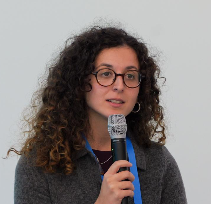
“Extending supercomputing beyond academia requires making these tools directly relevant to public administrators,” added Kyriaki Daskaloudi, Work Package Leader for Outreach, Awareness, and Impact Creation at HiDALGO2.
Kyriaki Daskaloudi (Future Needs), HiDALGO2 Dissemination and Exploitation leader
“Our goal is for European municipalities to be able adopt supercomputing insights to design cleaner, safer, and more climate-resilient urban centres.”
The Stockholm simulation workflow serves as a scalable showcase for public authorities across Europe seeking to incorporate high-performance computing into sustainable urban development.
About HiDALGO2
HiDALGO2 (High-Performance Computing and Big Data Technologies for Global Challenges) is a European Union EuroHPC Centre of Excellence coordinated by the Poznań Supercomputing and Networking Center (PSNC) in Poland. Uniting nine partners across seven countries, HiDALGO2 develops scalable HPC, AI, and Big Data solutions across five core environmental pillars:Urban Air, Building Energy Efficiency, Renewable Energy, Wildfires, and Aquatic Material Transport.
Media Contact:
Georgia Nikolakopoulou
Dissemination & Communication Specialist, HiDALGO2 Consortium
Email: georgia@futureneeds.eu
Website: https://www.hidalgo2.eu
HiDALGO2 partners
Poznań Supercomputing and Networking Center (PSNC) – Coordinator
High-Performance Computing Center Stuttgart (HLRS)
Széchenyi István University (SZE)
Centre for Modelling and Simulation in Strasbourg (Cemosis)
Institute of Communications and Computer Systems (ICCS)
Future Needs Management Consulting Ltd (FN)
DISCLAIMER
Co-funded by the European Union. This work has received funding from the European High Performance Computing Joint Undertaking (JU) and Poland, Germany, Spain, Hungary and France under grant agreement number: 101093457.
Views and opinions expressed are however those of the author(s) only and do not necessarily reflect those of the European Union or the European High-Performance Computing Joint Undertaking (JU) and Poland, Germany, Spain, Hungary, and France. Neither the European Union nor the granting authority can be held responsible for them.
